




Driving on the highway affects your car differently than driving around town. Many people argue about this topic, especially regarding commuting and resale value. We asked our experts here at Eskridge Chevrolet to delve into the subject and explain the differences.
Highway Miles Defined
While your car's odometer can't distinguish between highway and city miles, your vehicle almost certainly will. When you drive on the highway, those miles driven are highway miles. If your commute takes you via the highway, that's not a bad thing for your car. In fact, your vehicle benefits in several ways.
First, your engine experiences less wear and tear since it's running at consistent rpm, and this is an engine's most efficient operating state. Next, without stop lights and traffic, you brake less, which prolongs the life of your brake pads and associated components. Finally, the road surfaces on highways tend to be in better shape. Better roads put less strain on your steering and suspension systems.
Good Miles vs. Bad Miles
If you're considering buying a car, high mileage is often viewed negatively. It's true that the higher a car's mileage, the less that car is worth. But since a vehicle is less damaged by highway miles than city driving, this may not be accurate. This means you don't need to rule out considering high-mileage vehicles. First, however, you need to know what you're looking for that may indicate bad miles on a vehicle.
Ideally, you want to find a newer car with high mileage rather than an older model with many miles. For example, a 3-year-old Chevrolet Camaro with 75,000 miles almost certainly accumulated those miles on the highway. Conversely, if the same 3-year-old Camaro only had 20,000 miles on it, it probably spent a lot less time on freeway.
City Miles Defined
City miles refer to those miles driven on surface roads, not only in the city but around small towns and on back roads. Essentially, driving on any road that isn't a highway can fall within the definition of city miles. And these surfaces affect your car differently than highway miles.
First, cities have stoplights and potholes, as well as significant amounts of traffic. The suburbs might be smoother and less busy, but they aren't that much better than city streets. More rural areas have far fewer stoplights and much less traffic, but roads tend to be in even worse condition.
All these factors result in lots of accelerating and braking. Your engine works harder to get up to speed than it does to maintain a cruising speed, so city driving puts more wear and tear on your engine. And going from a standstill to 30 mph uses more gas than keeping a steady pace, which means you spend more money on gasoline.
Plus, your engine runs at its lowest rpm when you sit idling at a red light. That causes your oil pressure to drop, which wears out your engine's internal parts faster.
Your transmission and drivetrain are working hard, too, continually revving up and then down again. This causes these parts more wear and tear than getting to your cruising speed and maintaining it.
In addition, the constant stopping results in more wear and tear on your brake system. Poor road conditions and potholes also affect your vehicle and can cause significant damage. According to AAA, potholes have caused $15 billion in automobile damage over the last five years. Finally, hitting the occasional curb can damage wheels, side rails, and frames.
Another problem with city driving is the higher risk of accidents. With more traffic, varying speed zones, intersections, pedestrians, cyclists, animals, and other factors, the likelihood of a collision is far greater than driving on the highway. Highway driving has everyone heading in the same direction at relatively constant and comparable speeds. With fewer variables come fewer incidents.
Let's consider that 3-year-old Camaro again. Which would you feel more comfortable driving? The one with 75,000 miles or the one with 20,000?
The Cost of Wear and Tear
We've mentioned wear and tear often, but what does that mean for your vehicle? Some parts of your car were engineered to wear out, and others were meant to last a very long time. Wear and tear affects all your car's parts.
Those components that wear out naturally through use, such as the tires, brake pads, and wiper blades, deteriorate faster when you drive in the city. Furthermore, the constant jostling, turning, braking, and changing speeds will cause shock absorbers, struts, springs, and other suspension system components to wear faster too. Chances are, you'll need wheel alignments more often if you drive surface roads frequently.
Highway vs. City Ratings — What's More Important?
Most people want to know the fuel economy ratings when they shop for a vehicle. The industry refers to this as miles per gallon or mpg, which means the distance a vehicle can travel on a gallon of gas. The higher the number, the better a vehicle's economy.
The EPA requires car manufacturers to test vehicles' fuel efficiency and publish the results. You see these estimates on the window stickers at dealerships everywhere. You'll actually see three ratings: city, highway, and combined. Shoppers often consider these ratings when making a buying decision.
Finding a car with higher ratings will save you money no matter how much you drive. But a fuel-efficient model with a higher highway score rating makes the most sense if you commute long distances. In contrast, if your life has you staying around town, you want to get the best city miles-per-gallon rating. The combined rating is a weighted average between city and highway scores, which helps you make quick comparisons across vehicles and brands.
Explore Chevrolet Vehicle Ratings in Guthrie
At Eskridge Chevrolet, we know how important saving money at the pump is. That's why we stock an expansive vehicle inventory that gets excellent efficiency ratings. And the Chevrolet lineup offers premium cabins with the latest must-have tech. We recommend you shop our virtual inventory to get started. Then, stop by for a personal demonstration and test-drive the vehicle of your choice.
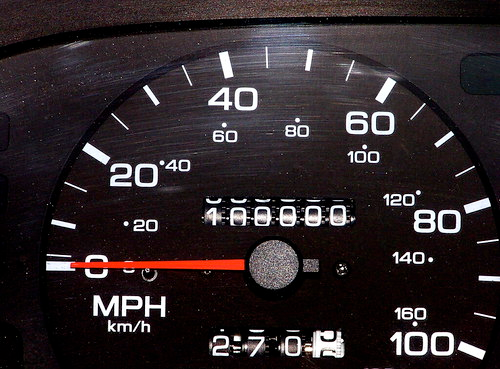
100000-mile turnover by liz west is licensed with CC BY 2.0