




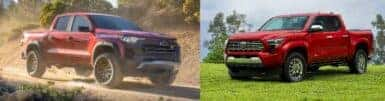
Picking the right midsize truck isn't just about checking boxes. It's about finding the one that actually fits how you'll use it. The 2026 Chevy Colorado and Toyota Tacoma both compete in this space, but they take pretty different approaches. The Colorado goes all-in on towing and hauling power, perfect for folks who need to pull heavy trailers or haul serious loads. Tacoma? It sticks to what Toyota does best: reliable performance with that famous off-road reputation.
Understanding what each truck does well helps you avoid buyer's remorse later. You don't want to realize six months in that your truck can't handle your boat trailer, or that you're paying for capability you'll never use.
2026 Chevy Colorado vs Toyota Tacoma: Head-to-Head Comparison
When you dig into the specs, these trucks show their personality differences pretty clearly. The Colorado chases maximum capability, while the Tacoma balances power with efficiency through its hybrid option. Both work well as midsize trucks, but they're aimed at different types of drivers.
Let's break down what matters most. Engine power, towing capacity, interior space, and technology features. These aren't just numbers on a spec sheet; they determine whether you'll love or hate living with your truck for the next several years.
Key Specifications at a Glance
| Spec | Chevy Colorado | Toyota Tacoma |
| Engine | 2.7L Turbo I4, 310 hp | 2.4L Turbo I4, up to 278 hp |
| Max Torque | 430 lb-ft | Up to 317 lb-ft |
| Towing Capacity | 7,700 lbs | 6,500 lbs (non-hybrid) |
| Payload Capacity | 1,570 lbs | Up to 1,705 lbs |
| Transmission | 8-speed auto | 8-speed auto, 6-speed manual |
| Drive Configuration | 4WD | RWD or 4WD |
Performance and Powertrain: Where the Colorado Excels
Here's where Colorado really shows its strength. If you've ever tried merging onto a busy highway while towing a heavy trailer, you know that power matters. A lot. The Colorado's powertrain was built specifically for these moments when you need every bit of torque available.
That turbocharged engine doesn't mess around. It delivers power when you press the pedal, without the hesitation you sometimes get with naturally aspirated engines. The Tacoma offers decent performance, but it's tuned more for balance than pure capability.
Engine Options and Power Delivery
The Colorado's 2.7L TurboMax creates serious torque down low, which is exactly what you want when accelerating with a loaded trailer. The turbocharger spools up quickly, too, so you're not waiting around for power to arrive. It feels confident and predictable, giving you control over exactly how much power gets delivered to the wheels.
The Tacoma's hybrid setup takes a different approach entirely. It prioritizes fuel savings over maximum output, which makes sense if efficiency matters more than raw capability. But when you need to pull a steep grade with 6,000 pounds behind you? That's where Colorado's philosophy pays off. The extra power isn't just nice to have; it's a safety margin that keeps you out of trouble.
Towing Capacity and Payload Comparison
Now we're talking about real differences. The Colorado hits 7,700 pounds of towing capacity, while the Tacoma falls short of that mark across comparable configurations. That's not a small gap either. It's the difference between confidently towing a mid-size travel trailer and wondering if you're pushing your limits.
Payload capacity tilts toward the Colorado, too. More payload means you can load the bed with tools, materials, or camping gear without worrying about hitting your limit. The Tacoma handles moderate towing just fine, but if you regularly push your truck hard, the Colorado's extra capacity provides peace of mind. Starting with higher numbers gives you room to work within your truck's safe operating range.
Technology and Infotainment Systems
Technology in trucks has come a long way from basic AM/FM radios. These days, your truck needs to work as a mobile office, entertainment center, and navigation hub. The Colorado steps up with a generous touchscreen that actually makes sense when you're trying to adjust settings while driving.
The bigger screen isn't just for show. When you're backing up a trailer, those extra inches of display space make it much easier to see what's happening behind you. Multiple camera angles help with tricky maneuvering situations that would otherwise require a spotter.
Built-in Wi-Fi keeps everyone connected on road trips, which matters more than you'd think when you're spending hours in the cab. The Tacoma delivers solid tech features that work reliably, but the Colorado's setup feels more modern and thoughtful.
Connectivity Features and User Experience
The Colorado's interface design is intuitive. Large buttons, clear menus, logical organization. You don't want to hunt through three sub-menus to turn on the heated seats when it's 20 degrees outside. Voice commands work well for common functions, keeping your hands on the wheel and eyes on the road.
The Tacoma keeps things straightforward, too, which has its own appeal. Simple systems tend to break less, and Toyota has a good track record with reliability. But the Colorado's larger display and more sophisticated graphics create a more polished experience that feels current with 2026 expectations.
Safety Features and Driver Assistance
Both trucks come loaded with safety technology, but the Colorado includes some clever trailering aids that really shine when you're hauling something heavy. Trailer sway monitoring can catch problems before they become dangerous, and the backup camera system provides guidance that makes parking with a trailer much less stressful.
The Tacoma builds on Toyota Safety Sense, which has proven itself reliable over multiple generations. Both trucks include the essential active safety features: automatic emergency braking, lane keeping assist, adaptive cruise control. The Colorado's towing-specific technologies give it an edge if you regularly pull trailers, but either truck will keep you safer than older vehicles without these systems.
Off-Road Capability and Trail Performance
Off-road capability is where brand loyalties really show up. The Colorado ZR2 delivers serious trail performance with upgraded suspension, better tires, and specialized dampers that handle aggressive terrain without beating up passengers. It's designed for folks who want to tackle challenging trails regularly.
The Tacoma's TRD Off-Road and TRD Pro trims build on Toyota's strong reputation in this area. These packages balance daily driving comfort with legitimate off-road capability. Both approaches work well, but they feel different on the trail.
The Colorado ZR2 acts more like a specialized off-road machine that happens to be street legal. The Tacoma TRD models feel like versatile trucks that excel off-road without giving up too much on-road comfort. Your choice depends on how extreme your off-road adventures get.
Interior Comfort, Space, and Practicality
Interior space becomes critical when you're spending hours in the cab or carrying passengers regularly. The Colorado provides noticeably more rear legroom, which matters if you've got kids, friends, or coworkers riding along frequently. That extra space makes a big difference on longer trips.
Storage solutions feel well thought out in the Chevy Colorado. Cup holders where you need them, charging ports in logical locations, bins and compartments that actually hold useful items. The cabin feels like it was designed by people who actually use trucks for work and recreation.
The Tacoma's interior works fine, but feels more compact in the back seat. Material quality is appropriate for both trucks, with higher trims offering nicer touches. But raw space gives the Colorado an advantage for families or work crews.
Fuel Efficiency and Long-Term Value
Real-world ownership costs matter more than purchase price over the long haul. The Tacoma achieves better fuel economy, especially with the hybrid variant that shines in stop-and-go driving. If you're covering high mileage or fuel prices concern you, this advantage adds up over time.
The Colorado trades some efficiency for capability, which makes sense if you regularly use that extra towing and hauling capacity. You can't haul what you can't haul, regardless of fuel costs. Both trucks hold their value reasonably well, though specific market conditions and trim levels affect resale values.
Warranty Coverage and Ownership Costs
Both manufacturers offer competitive warranty coverage, though exact terms vary by model year and configuration. Insurance rates depend on vehicle value, safety ratings, and repair costs. The Colorado's performance focus might result in slightly higher maintenance costs if you regularly push the truck hard, but proper maintenance keeps either truck running reliably.
Consider total ownership costs rather than just the sticker price. Fuel, insurance, maintenance, and depreciation all factor into what you'll actually spend over several years of ownership.
Why the 2026 Chevy Colorado is the Smart Choice
The 2026 Chevy Colorado makes the most sense for buyers who want maximum capability without compromising on modern conveniences. That 7,700-pound towing capacity isn't just a number; it's the difference between confidently hauling your toys and wondering if you're pushing your luck.
The turbocharged engine delivers when you need it, whether you're merging onto the interstate with a loaded trailer or climbing mountain passes. Advanced technology features enhance daily use without adding unnecessary complexity. More interior space keeps passengers comfortable on long hauls.
The Colorado's engineering focuses on real-world capability that owners actually use. This practical approach results in a truck that excels at work tasks while remaining comfortable enough for family duty. It's the combination of power, technology, and versatility that creates compelling value in the midsize truck segment.
Experience the Colorado Difference at Eskridge Chevrolet
Reading specs only tells part of the story. You need to get behind the wheel to understand how the Colorado's power delivery feels, how the interior fits your needs, and how the technology works in practice. Eskridge Chevrolet in Guthrie, Oklahoma, offers the chance to explore the Colorado lineup firsthand.
Our team gets what midsize truck buyers actually need and can match different configurations to your specific usage patterns. We stock both new Chevrolet vehicles and quality pre-owned options for various budgets. Located at 5307 S Division St, Eskridge Chevrolet provides complete service, including financing, trade evaluations, and ongoing maintenance support.
Hours work with busy schedules: Monday through Friday, 8:00 AM to 7:00 PM, Saturdays until 5:00 PM. Call (405) 293-4224 or visit our contact page to schedule a test drive and experience how the Chevy Colorado's capabilities translate to real-world advantages.