

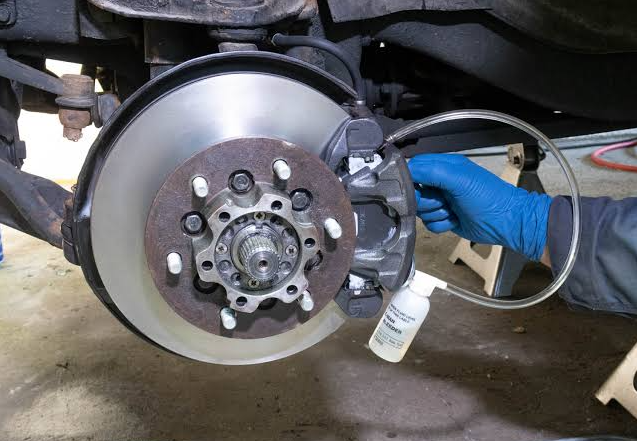
If you've searched for how to bleed brakes, you probably noticed something odd about your pedal or heard that your fluid is due for attention. We get this question often at our Guthrie, OK service department. Below, you'll find what the job involves and why we think trained technicians should handle it. If something feels off, you can reach our service department any time.
What Is Brake Bleeding and Why Does It Matter for Your Chevy?
Brake bleeding removes trapped air from the brake lines. A brake fluid service is a separate job that replaces old, moisture-contaminated fluid. The two overlap in how they're performed, but they solve different problems.
Your brakes work hydraulically. When you press the pedal, pressure travels from the master cylinder through the brake lines to the calipers at each wheel. Reliable braking depends on clean fluid and sound hydraulic parts. Bleeding can't fix worn pads, damaged rotors, or a leak that hasn't been repaired.
The correct method depends on your Chevrolet's model, model year, and brake system configuration. No single procedure works for every vehicle.
How Air and Moisture Affect Your Brake Hydraulic System
Brake fluid transmits pressure with very little compression. Air compresses, so air in the lines can produce a soft pedal or extra pedal travel. It can get in when hydraulic components are opened, through certain leaks, or when the reservoir runs too low. Normal pedal use shouldn't introduce air into an intact system.
Moisture is the slower problem. Conventional glycol-based brake fluids absorb moisture over time, which lowers the fluid's boiling point and can contribute to internal corrosion. Under heavy braking, overheated, moisture-contaminated fluid can form vapor that interferes with steady hydraulic pressure.
Brake Bleeding vs. a Brake Fluid Service
Bleeding targets trapped air. A brake fluid service, on the other hand, replaces aged or contaminated fluid throughout the system. Topping off the reservoir accomplishes neither, since it doesn't remove air or replace fluid in the brake circuits.
| Service | What It Does | When It May Be Needed | Done With Repairs? |
|---|---|---|---|
| Brake bleeding | Removes trapped air from the brake lines | When a technician finds air in the hydraulic system, such as after certain repairs | A technician determines this from the vehicle's needs |
| Brake fluid service | Replaces old, moisture-contaminated fluid | Per Chevrolet's schedule for your vehicle; for Chevrolet EVs, every 2–3 years or per the manufacturer's schedule; otherwise check your owner's manual | A technician determines this from the vehicle's needs |
When someone recommends bleeding or a brake fluid service, ask exactly what it includes. The terms aren't interchangeable.
Brake Warning Signs Every Chevy Driver Should Know
Brake concerns can have multiple causes, and similar symptoms can come from different faults. If the pedal feel, stopping performance, or noise changes, get an inspection rather than assuming the car needs bleeding. Chevrolet lists these brake warning signs as reasons service may be necessary:
Grinding noises can mean the brakes need attention.
Stopping distances may be longer than normal.
The pedal may feel spongy.
The pedal may extend farther than normal.
You may feel vibration in the pedal or steering wheel during braking.
The vehicle may pull left or right when you brake.
Chirping, squealing, whistling or shaking when you stop are also signs your brakes need service. Many Chevrolet brake pads have wear-indicator tabs that make a chirping, squealing or whistling sound when you apply the brakes and the pads are getting thin, and some vehicles have a Brake Pad Life Monitor that shows a Driver Information Center message when the pads need replacing. If you're wondering how to tell if brakes need bleeding, an inspection is the place to start.
When to Call Us Right Away
Your pedal sinks to the floor.
A brake warning light comes on.
You see fluid leaking.
Driving with compromised brakes is risky. If braking ability is substantially reduced or you suspect a leak, don't drive in. Arrange a tow.
Spongy Brake Pedal and Unusual Pedal Feel
A spongy brake pedal has several possible causes. Air in the hydraulic system is one. Leaks and failing hydraulic components can produce similar symptoms, so we don't diagnose by feel alone. Excessive pedal travel, or a pedal that slowly sinks under steady pressure, needs prompt evaluation.
If the pedal still feels wrong after service, the next step is further diagnosis to find the cause. Bleeding again and again won't get you there.
Grinding, Vibration, and Longer Stopping Distances
Grinding commonly points to worn or damaged friction components like pads or rotors, not trapped air, and bleeding won't repair them. If you hear the wear indicators chirping or squealing when you brake, have the pads checked soon.
Vibration in the pedal or steering wheel during braking is a Chevrolet-listed warning sign, and it usually points to a mechanical issue for a technician to inspect. Longer stopping distances can stem from overheating, friction-component problems or hydraulic faults, so they need a full inspection, not just a bleed.
Why Brake Bleeding Is Best Left to Certified Technicians
Drivers often ask how hard it is to bleed brakes, or whether you can bleed brakes by yourself. We'd skip the walkthrough and explain what the job involves. At a high level, a technician removes air, flushes aged fluid, and confirms the pedal is restored. Each step carries a safety risk.
An incorrect procedure can leave air in the system or add more. Our Certified Service technicians follow GM procedures for your specific vehicle, covering the bleeding sequence, equipment, fluid specification and final checks, rather than a generic wheel order. Proper service also means holding the reservoir level, keeping contamination out, checking for leaks and handling bleeder screws without damaging them.
A finished job means confirming pedal operation, fluid level, hydraulic integrity and braking performance, and a lack of bubbles is only part of that picture. For these reasons, we don't recommend jacking up a vehicle, removing wheels or opening a bleeder screw without proper training and equipment. If you're unsure what your Chevy needs, schedule brake service and let us find out.
Chevrolet Brake Fluid and Recommended Service Guidance
Chevrolet brake fluid requirements are specific to each vehicle, so use the specification in your owner's manual and don't assume every Chevy uses the same fluid.
Chevrolet brake fluid requirements are specific to each vehicle. Use the specification in your owner's manual or applicable service information. Don't assume every Chevy uses the same fluid, and don't pick a product just because it's marketed for performance.
Chevrolet doesn't set a fixed brake-service interval because wear varies with driving habits and conditions, but we recommend a brake inspection at least every 7,500 miles. Towing or repeated heavy braking generates heat, and a technician takes that into account when judging fluid condition. Low fluid should prompt a check for pad wear or a leak, since an automatic top-off could hide a problem, and fluid color alone can't tell you the system is healthy.
What Chevrolet Certified Service Includes for Brake Care
Good brake care combines inspection, diagnosis, and any needed repair or fluid service. Bleeding isn't a stand-alone cure for every complaint. At Eskridge Chevrolet, our Certified Service experts maintain Chevrolet braking components, use GM-approved tools and parts, and follow GM procedures for diagnostics and safety systems. Brakes and fluid levels are part of our Multi-Point Vehicle Inspection. For brake service, we install GM Genuine Parts and ACDelco components.
What to Expect at Your Visit
We inspect the brakes and talk through your symptoms.
We check brake fluid level and condition.
We perform bleeding or a flush if the technician determines it's needed.
We check the pedal.
We take a test drive.
Professional Brake Inspection and Fluid Service
Brakes are inspected during every Multipoint Inspection at GM dealerships, covering pads or shoes, rotors, hoses and calipers for wear, plus fluid lines for cracks and leaks. We weigh your reported pedal changes against what the technician finds, which helps separate air-related concerns from mechanical wear or component failure.
Bleeding or flushing is not part of every brake inspection. A technician determines what your vehicle needs. When fluid replacement is warranted, the goal is fresh fluid of the correct specification, with no air or contamination getting in. Afterward, we verify pedal operation and check for leaks before you drive away.
When Bleeding Is Needed After Brake Repairs
Opening the hydraulic circuit during a repair can let air in, and bleeding may follow under the applicable procedure. Fixing a leak may also call for bleeding, but bleeding before the leak is repaired doesn't solve the fault. Routine pad or rotor replacement doesn't automatically require it if the circuit stays closed and the procedure doesn't call for it. Work on the master cylinder or ABS hydraulic components can require extra steps beyond the wheels, including specialized scan tools.
Chevy Brake Service in Guthrie, OK at Eskridge Chevrolet
Whether you have a soft pedal, odd braking behavior, a fluid concern or a recent hydraulic repair, our Chevy brake service in Guthrie starts with an inspection. That tells us whether you need bleeding, a fluid exchange, mechanical repairs or a combination. When you come in, tell us when the symptoms happen, whether you've seen fluid loss and about any recent brake work.
We're at 5307 South Division Street in Guthrie. Our service department is open Monday through Friday from 7:30 a.m. to 6 p.m. and Saturday from 8 a.m. to 1 p.m. Call service at 405-293-0100.
Schedule Your Brake Service Today
Now you know what brake bleeding involves and why it's a job for trained technicians. If your braking has changed, don't wait for a routine appointment. Schedule certified service with your Chevrolet's model, year, mileage, symptoms and recent service history, and we'll start by diagnosing the concern.
Have questions first? Contact us. If you have severe braking problems or a suspected fluid leak, arrange a tow instead of driving to Guthrie.