





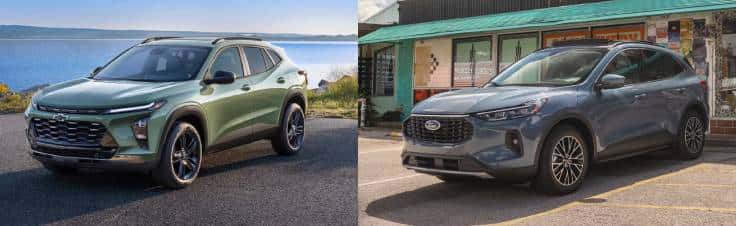
Shopping for a compact SUV? You’re looking at some tough choices. The 2026 Chevy Trax and 2026 Ford Escape take completely different approaches to this popular segment. Here at Eskridge Chevrolet in Guthrie, Oklahoma, we see buyers wrestling with these decisions daily. Performance, interior space, tech features, safety ratings, value – there’s a lot to consider. Let’s break down what actually matters when you’re choosing between these two.
2026 Chevy Trax vs 2026 Ford Escape: Overview and Key Differences
These vehicles couldn’t be more different in philosophy. The Trax keeps things simple: affordable, efficient, and easy to park anywhere. It’s the straightforward choice. The Escape? That’s where things get complicated (in a good way). Multiple trims, hybrid options, different power levels – basically, whatever you want, Ford probably builds it.
Both seat five people and give you that higher seating position everyone loves. But that’s where similarities end. The Trax works perfectly if you’re navigating tight city streets and watching every dollar at the gas pump. The Escape appeals to families who need more space and tech enthusiasts who want the latest features.
Here’s the hard data:
| Spec | 2026 Chevy Trax | 2026 Ford Escape |
| Engine | 1.2L turbo 3‑cyl ECOTEC | 1.5L EcoBoost turbo 3‑cyl (base); hybrid available |
| Horsepower | 137 hp | 180 hp gas; 191–192 hp hybrid |
| Torque | 162 lb‑ft | 199 lb‑ft (gas) |
| Fuel economy (city/hwy, FWD) | 28/32 MPG | 27/34 MPG gas; 42/36 MPG hybrid |
| Combined MPG | 30 MPG | Approx. 30 MPG gas; 39–40 MPG hybrid |
| Cargo space (behind seats) | 25.6 cu. ft. | 37.5 cu. ft. |
| Max cargo space (seats down) | 54.1 cu. ft. | Up to 65.4 cu. ft. |
| Drivetrain availability | FWD only | FWD or AWD (gas); hybrid FWD or AWD in some markets |
| Infotainment | 11″ touchscreen (most trims) | 8″–13″ touchscreen, depending on trim |
| Curb weight range | 2,980–3,000 lbs | 3,270–3,420+ lbs (gas); hybrids slightly heavier |
The target buyers tell the whole story. Trax buyers are often moving up from a sedan or buying their first SUV. They want something reliable without breaking the bank. Escape buyers? They’re comparing against Honda CR-V, Toyota RAV4 – the established players who charge premium prices for premium features.
Chevy Trax Performance and MPG vs Ford Escape Efficiency
Your daily drive shapes how these engines feel. They’re built for completely different purposes, and you’ll notice immediately.
Engine Power and Driving Dynamics
The Trax runs a 1.2-liter turbocharged three-cylinder making 137 hp and 162 lb-ft of torque. Sounds modest on paper, right? But here’s the thing: it weighs 550-650 pounds less than the Escape. That lighter weight makes it feel peppy around town. Stop-and-go traffic, tight parking spots, quick lane changes – the Trax handles it all with surprising agility.
Ford gives you options. The base 1.5-liter turbo three-cylinder pumps out 180 hp and 199 lb-ft. That’s noticeably more grunt when merging onto highways or climbing hills. Want even more? The hybrid setup delivers 192 hp with that smooth electric motor assistance. There’s even a plug-in hybrid if you can charge at home.
Driving character? Night and day difference. The Trax feels like a nimble city car that happens to sit higher. It’s genuinely fun to toss around corners. The Escape feels more substantial, more planted at highway speeds. Ford includes drive modes (Eco, Sport, Slippery) that the Trax skips entirely. You also get features like Reverse Brake Assist that the Trax doesn’t offer.
Fuel Economy Comparison
This is where it gets interesting. The Trax delivers 28 MPG city, 32 highway, 30 combined. Consistent, predictable, and good enough for most people. Simple.
The Escape’s story depends entirely on which version you choose. Regular gas engines hit 27 city, 34 highway. Pretty similar to the Trax, actually. But those hybrid models? Game changer. We’re talking 42 MPG in the city, where electric motors do most of the work. The plug-in hybrid goes even further if you can charge regularly.
Your annual fuel costs vary dramatically here. The Trax keeps things steady across its single engine choice. The Escape hybrid can cut your gas bills substantially, but you’ll pay thousands more upfront. Do the math based on your driving patterns.
Exterior Design: Style and Modern Appeal Compared
First impressions count. The Trax shows off contemporary Chevy styling with a bold front end and sculpted sides. Its compact size creates an athletic look that emphasizes agility over presence. LED lighting elements give it a modern appearance without requiring expensive packages.
The Escape takes up more visual space, and Ford’s designers used every inch. The grille stretches wider, the hood extends longer, and the overall profile looks more commanding on the road. There’s more drama in the side profile with that rising beltline and sloping roof design.
Color options reflect each vehicle’s positioning. The Trax sticks to mainstream choices that most buyers prefer. The Escape expands into more adventurous territory with packages that add roof rails, upgraded lighting, and distinctive body cladding.
Chevy Trax Interior vs Ford Escape: Comfort and Cabin Quality
Step inside and the differences become obvious. The Trax gives you a functional workspace focused on the essentials. Hard plastics dominate lower surfaces, though Chevy softened up the areas you touch most. The dashboard stays simple with actual buttons for climate control instead of burying everything in touchscreen menus. It feels practical rather than luxurious, which matches what you’re paying.
The Escape steps up its game considerably. Better materials appear throughout the cabin, creating a genuinely more refined environment. Soft-touch surfaces extend further down the doors and across the dash. You’ll notice stitching details and contrasting textures that add visual interest. The center console feels more substantial with smarter storage solutions. Road and wind noise stay quieter at highway speeds, too.
Passenger Space and Seating Comfort
Be honest about your passenger’s needs. The Trax’s compact dimensions create real limitations for rear-seat occupants. Adults fit fine for quick trips, but longer drives reveal that cramped rear legroom. The bench sits pretty low, forcing passengers into that knees-up position nobody likes. Door openings feel narrow when you’re getting in and out.
The Escape transforms rear-seat comfort completely. Adults can actually stretch out back there with generous legroom. The higher roofline provides 39.3 inches of rear headroom even for taller folks. The bench sits at a more natural height, making long drives bearable. Wider door openings simplify entry and exit, plus make child seat installation much easier.
Cargo Capacity and Versatility
Cargo space often determines the final decision. The Trax offers 25.6 cubic feet behind the rear seats – adequate for grocery runs and weekend trips. Fold those seats down, and capacity expands meaningfully, though the cargo floor sits higher than ideal for loading heavy items.
The Escape absolutely dominates here with 37.5 cubic feet behind the rear seats. That cargo area stretches deeper and wider, easily swallowing larger purchases. The flat loading floor after folding seats simplifies loading furniture or recreational gear. Underfloor storage compartments keep smaller items organized. Power liftgate operation adds convenience on equipped models. The wider opening accommodates stuff that simply won’t fit in the Trax.
Ford includes cargo management features that the Trax skips: adjustable floor heights, tie-down points, and power outlets. The Trax keeps cargo organization basic.
Chevy Trax Features vs Ford Escape Technology
Technology integration reveals another significant gap. The Trax covers essential infotainment needs through a 7-inch touchscreen (10.25-inch available) with wireless Apple CarPlay and Android Auto. The system responds adequately and displays clear graphics. Navigation requires your smartphone rather than built-in mapping.
The Escape pushes technology much further. Larger screens appear on most trims, with premium models featuring expansive displays that dominate the dashboard. Built-in navigation comes standard on higher trims. Premium audio systems from recognized brands deliver noticeably enhanced sound quality. The digital instrument cluster replaces analog gauges with customizable displays showing everything from trip data to navigation directions.
Driver assistance technologies create another meaningful separation. The Trax includes fundamental safety features without the advanced systems found in pricier segments. The Escape bundles sophisticated driver aids across more trim levels: adaptive cruise control with stop-and-go functionality, lane centering assistance, and automated parking systems.
Connectivity features reflect what modern buyers expect. Both offer basic connected services, but the Escape provides more comprehensive remote functions through smartphone apps. Remote start, door lock verification, vehicle location tracking – conveniences that add up daily. Over-the-air software updates keep systems current without dealership visits.
Chevy Trax Safety vs Ford Escape: Protection and Driver Assistance
Safety performance splits along engineering priorities and standard equipment. The Trax includes essential airbag systems, stability control, and basic driver aids. Forward collision warning and automatic emergency braking come standard. The rearview camera displays clear images during reversing. Blind spot monitoring appears on higher trims as optional equipment.
Interestingly, the Trax demonstrates superior NHTSA 35 MPH front crash test performance with lower neck compression and hip force in certain scenarios. But the Escape achieves higher IIHS moderate front offset scores and better rear passenger injury measures.
The Escape pursues safety more aggressively through comprehensive standard equipment. Advanced driver assistance systems come standard across more trim levels. Lane keeping assist actively steers the vehicle back between lines when drift occurs. The rear cross-traffic alert warns of approaching vehicles during parking lot reversing.
Structural engineering contributes to safety differences. The Escape’s additional size provides more crush zones that absorb impact energy. High-strength steel usage in critical areas improves crash protection. Side-impact beams and reinforced pillars enhance rollover safety.
Pricing, Value, and Final Verdict: Why the 2026 Chevy Trax Wins
Money talks, especially in this segment. The Trax enters at an accessible starting point that significantly undercuts the Escape. Base model pricing brings new vehicle ownership within reach for buyers who might otherwise shop used cars. Trim progressions remain modest, keeping fully-equipped models affordable. Lower operating costs through reasonable insurance rates and maintenance expenses sweeten the deal.
The Escape commands premium pricing, though it justifies those higher sticker prices with superior capabilities across multiple areas. Base models start thousands higher than the Trax but include more standard equipment. Hybrid models add even more to those prices, though fuel savings help offset the difference over time.
Value depends entirely on your priorities. The Trax maximizes value for buyers focused on affordability and essential functionality. Its straightforward approach eliminates complexity and unnecessary features that inflate costs. Urban drivers benefit from that nimble, compact size. The 550-650 lb weight advantage creates a responsive, engaging driving character that many prefer over crushing horsepower numbers.
The Escape rewards buyers willing to invest more up front. Superior passenger comfort, that massive cargo capacity advantage (37.5 cubic feet versus 25.6), advanced technology features, and available AWD justify premium pricing for families requiring maximum versatility.
For budget-conscious buyers who prioritize affordability, urban maneuverability, and efficient operation, the 2026 Chevy Trax emerges as the smarter choice. Its combination of accessible pricing, competitive 30 MPG combined fuel economy, and essential features delivers practical transportation without financial stress.
Experience the 2026 Chevy Trax at Eskridge Chevrolet
Reading comparisons only tells part of the story. Nothing beats experiencing the 2026 Chevy Trax firsthand. Visit us at Eskridge Chevrolet in Guthrie, Oklahoma, to see how this vehicle handles your specific driving conditions. Test driving reveals whether ergonomics suit your preferences and if cabin space meets your needs. You’ll discover how the technology interfaces work and whether the driving dynamics match your expectations.
Our experienced staff can explain available features, trim differences, and current incentives that affect your total investment. We provide comprehensive services beyond the initial purchase: financing options, trade-in evaluations, and ongoing service using genuine Chevrolet parts.
Contact us at (405) 293-4224 or through our website to schedule a test drive and start your journey toward 2026 Chevy Trax ownership.
Connect with us


- July 2026
- June 2026
- May 2026
- April 2026
- March 2026
- February 2026
- January 2026
- December 2025
- November 2025
- October 2025
- September 2025
- August 2025
- July 2025
- June 2025
- May 2025
- April 2025
- March 2025
- June 2023
- May 2023
- April 2023
- March 2023
- February 2023
- January 2023
- December 2022
- November 2022
- October 2022
- September 2022
- August 2022
- July 2022
- June 2022
- May 2022
- April 2022
- March 2022
- February 2022
- January 2022
- October 2021
- September 2021
- June 2021
- May 2021
- April 2021
- February 2021
Archives
- 2022 Chevrolet Colorado
- 2022 Chevrolet Trax
- 2022 Chevy Equinox
- Chevrolet Bolt EUV
- Chevrolet Electric Vehicles
- Chevrolet Financing
- Chevrolet Model Feature
- Chevrolet Model Features
- Chevrolet Silverado
- Chevrolet Suburban
- Chevrolet SUVs
- Chevrolet Trucks
- Financing
- Local
- New Chevrolet
- Restaurants
- Road Safety
- Service
- Uncategorized
- Used Cars
- Vehicle Comparison