

Blog / Road Safety

Best Tire Brands for Winter Tires

Best Tire Brands for Winter Tires

There are many things you can do to keep yourself safe while driving in bad weather conditions. For example, you can drive at a slower speed, drive with your warning lights on, or keep a supply of emergency materials inside your vehicle. One of the best things you can do, though, is install winter tires before those bad conditions arrive. Below, we outline the importance of winter tires, along with some of the best brands to consider when shopping for them.

What Are Winter Tires?

Most vehicles come with all-weather tires. They are great at handling average driving conditions. For example, they can handle roads when it’s raining or when temperatures change significantly. However, in some locations, you might get more inclement weather, like massive snowstorms or heavy rainfalls. When this happens, you may want tires that are specifically designed to handle these rougher conditions.

Winter tires, sometimes called snow tires, are tires you can put on your vehicle to help it better handle rougher road conditions. They are made of a different material than all-weather tires and have different characteristics about them. They are called winter tires because most vehicle owners install them before the winter season arrives, which typically brings with it tough driving weather, such as snow and ice.

When Should You Use Winter Tires?

The best time to install winter tires is before the winter season arrives. While the weather is always unpredictable from year to year, here in Guthrie, the winter season typically starts around mid-November. Therefore, you’d ideally want to install your winter tires before this time. Many drivers choose to install winter tires during the fall and remove them once spring arrives. However, it’s never too late to install winter tires if you believe bad weather lies ahead.

You may also want to install winter tires if you know you’ll be driving on tougher roads in the near future. For example, if you plan on taking a road trip further north, you might expect bad snowstorms or some off-road driving. Installing winter tires then would help your vehicle handle these conditions and keep you safe on your trip.

What Are the Best Tire Brands for Winter Tires?

When it comes time to shop for winter tires, there are many brands to choose from. Since you’re purchasing tires that you intend to rely on during difficult driving conditions, it’s important that you get quality winter tires. To do this, you should rely on a trusted brand name that has a history of developing dependable winter tires. Here are some great options to consider:

Michelin

Michelin is one of the biggest names in tires. As such, they have a wide range of tires to choose from for all sorts of vehicles. Among their best winter tires are the Michelin X-Ice tires. These quiet tires have exceptional braking ability both in the snow and on the ice, making them a great choice for when the next major snowstorm comes through.

Goodyear

Goodyear is another popular tire brand. They have many winter tire options to choose from, but if you’re driving a smaller vehicle, explore the Goodyear Ultra Grip tires. They are an affordable option for drivers of sedans, while still providing excellent braking in wet conditions.

Nokian

Nokian is a less common brand, but they produce some of the best winter tires available. Their Hakkapeliitta 10 tires are excellent for SUVs, perhaps the best winter tires on the market. They use a V-shaped tread to help grip the road and come with studs for increased durability. Perhaps best of all, they not only excel at handling wet conditions but are great on dry roads as well, allowing you to benefit from them between storms.

Bridgestone

Finally, there are Bridgestone tires. Like Goodyear and Michelin, Bridgestone has winter tires for vehicles of all shapes and sizes. One of the best winter tires from Bridgestone is the Blizzak WS90. The WS90 is more durable now compared to previous versions, and it gets better performance from its more widely spaced tread. There are 53 sizes available for the WS90, ranging from 15 to 20 inches, making it easy to find a set that fits your vehicle.

How To Install Winter Tires

If you decide to get winter tires on your vehicle, the best thing you can do is bring it to a professional tire installation center. This is because installing new tires is a difficult process if you don’t have the right setup at home. To install new tires, you need to remove the old ones by raising the vehicle and removing all the lug nuts. You would then need to install each new snow tire, after which you need to balance them all to ensure a smooth ride.

This is a time-consuming process and requires specialized equipment. Luckily, a professional tire installation provider can do this job in a short amount of time and for an affordable price. To get winter tires installed on your vehicle, you should schedule an appointment at your local tire center in advance to ensure you get them done before winter arrives.

Get Your Next Set of Winter Tires at Eskridge Chevrolet

If you’re in the Eskridge area and want to install winter tires on your vehicle, the team at Eskridge Chevrolet is here to help. To start, we have a wide range of tires available in our parts department . You can easily browse through all the available options or ask our expert staff to recommend the best tires for your vehicle. After that, we can set up a time to install the tires at our service center .

We’ve installed countless winter tires for the residents of Eskridge, meaning we know how to install them safely and quickly. Don’t wait until you hear on the news about the major storm coming through to schedule your winter tire installation appointment . Contact us today so that when those rougher driving conditions come around, you’ll be prepared to handle them.

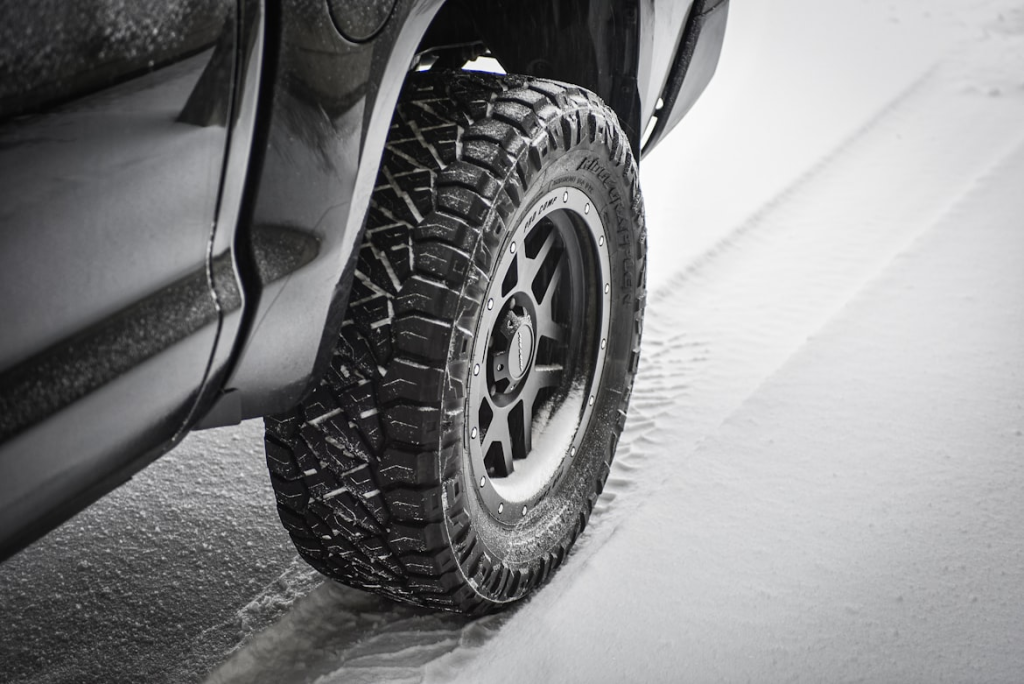
Image by Daniel Foster is licensed with Unsplash License
Posted in:

Related Posts

What’s the Difference Between Highway Mileage and City Mileage

What's the Difference Between Highway Mileage and City Mileage

Driving on the highway affects your car differently than driving around town. Many people argue about this topic, especially regarding commuting and resale value. We asked our experts here at Eskridge Chevrolet to delve into the subject and explain the differences. Highway Miles Defined While your car's odometer can't distinguish between highway and city miles, your vehicle almost certainly will. When you drive on the highway, those miles driven are highway miles. If your commute takes you via the highway, that's not a bad thing for your car. In fact, your vehicle benefits in several ways. First, your engine experiences less wear and tear since it's running at consistent rpm, and this is an engine's most efficient operating state. Next, without stop lights and traffic, you brake less, which prolongs the life of your brake pads and associated components. Finally, the road surfaces on highways tend to be in better shape. Better roads put less strain on your steering and suspension systems. Good Miles vs. Bad Miles If you're considering buying a car, high mileage is often viewed negatively. It's true that the higher a car's mileage, the less that car is worth. But since a vehicle is less damaged by highway miles than city driving, this may not be accurate. This means you don't need to rule out considering high-mileage vehicles. First, however, you need to know what you're looking for that may indicate bad miles on a vehicle. Ideally, you want to find a newer car with high mileage rather than an older model with many miles. For example, a 3-year-old Chevrolet Camaro with 75,000 miles almost certainly accumulated those miles on the highway. Conversely, if the same 3-year-old Camaro only had 20,000 miles on it, it probably spent a lot less time on freeway. City Miles Defined City miles refer to those miles driven on surface roads, not only in the city but around small towns and on back roads. Essentially, driving on any road that isn't a highway can fall within the definition of city miles. And these surfaces affect your car differently than highway miles. First, cities have stoplights and potholes, as well as significant amounts of traffic. The suburbs might be smoother and less busy, but they aren't that much better than city streets. More rural areas have far fewer stoplights and much less traffic, but roads tend to be in even worse condition. All these factors result in lots of accelerating and braking. Your engine works harder to get up to speed than it does to maintain a cruising speed, so city driving puts more wear and tear on your engine. And going from a standstill to 30 mph uses more gas than keeping a steady pace, which means you spend more money on gasoline. Plus, your engine runs at its lowest rpm when you sit idling at a red light. That causes your oil pressure to drop, which wears out your engine's internal parts faster. Your transmission and drivetrain are working hard, too, continually revving up and then down again. This causes these parts more wear and tear than getting to your cruising speed and maintaining it. In addition, the constant stopping results in more wear and tear on your brake system. Poor road conditions and potholes also affect your vehicle and can cause significant damage. According to AAA, potholes have caused $15 billion in automobile damage over the last five years. Finally, hitting the occasional curb can damage wheels, side rails, and frames. Another problem with city driving is the higher risk of accidents. With more traffic, varying speed zones, intersections, pedestrians, cyclists, animals, and other factors, the likelihood of a collision is far greater than driving on the highway. Highway driving has everyone heading in the same direction at relatively constant and comparable speeds. With fewer variables come fewer incidents. Let's consider that 3-year-old Camaro again. Which would you feel more comfortable driving? The one with 75,000 miles or the one with 20,000? The Cost of Wear and Tear We've mentioned wear and tear often, but what does that mean for your vehicle? Some parts of your car were engineered to wear out, and others were meant to last a very long time. Wear and tear affects all your car's parts. Those components that wear out naturally through use, such as the tires, brake pads, and wiper blades, deteriorate faster when you drive in the city. Furthermore, the constant jostling, turning, braking, and changing speeds will cause shock absorbers, struts, springs, and other suspension system components to wear faster too. Chances are, you'll need wheel alignments more often if you drive surface roads frequently. Highway vs. City Ratings — What's More Important? Most people want to know the fuel economy ratings when they shop for a vehicle. The industry refers to this as miles per gallon or mpg, which means the distance a vehicle can travel on a gallon of gas. The higher the number, the better a vehicle's economy. The EPA requires car manufacturers to test vehicles' fuel efficiency and publish the results. You see these estimates on the window stickers at dealerships everywhere. You'll actually see three ratings: city, highway, and combined. Shoppers often consider these ratings when making a buying decision. Finding a car with higher ratings will save you money no matter how much you drive. But a fuel-efficient model with a higher highway score rating makes the most sense if you commute long distances. In contrast, if your life has you staying around town, you want to get the best city miles-per-gallon rating. The combined rating is a weighted average between city and highway scores, which helps you make quick comparisons across vehicles and brands. Explore Chevrolet Vehicle Ratings in Guthrie At Eskridge Chevrolet, we know how important saving money at the pump is. That's why we stock an expansive vehicle inventory that gets excellent efficiency ratings. And the Chevrolet lineup offers premium cabins with the latest must-have tech. We recommend you shop our virtual inventory to get started. Then, stop by for a personal demonstration and test-drive the vehicle of your choice. 100000-mile turnover by liz west is licensed with CC BY 2.0

Oklahoma Car Seat Laws

Oklahoma Car Seat Laws

Car seat laws refer to regulations relating to the safety of the passengers in a motor vehicle, particularly very young children. Specific laws vary by state. If you're an Oklahoma resident, it's essential to understand the laws that apply to you and your loved ones, as well as their importance and associated penalties. In this article, we provide all the information you need to familiarize yourself with these rules of the road in the Sooner State. What Are the Current Car Seat Laws in Oklahoma? The current car seat laws in Oklahoma state that children under the age of 8 must be properly secured in a child passenger restraint system that satisfies Federal Motor Vehicle Safety Standard 213. This standard identifies multiple varieties of child passenger restraint systems. Those that relate specifically to Oklahoma's car seat laws are: Rear-Facing Car Seat: This type of car seat positions the child so that they face the back of the vehicle. This orientation provides greater support to the head, neck, and spine, which are particularly susceptible to injury in infants and toddlers. Forward-Facing Harnessed Car Seat: Here, the car seat allows the child to face the front of the vehicle but features durable straps that secure them across the most rigid areas of the body — namely the shoulders and hips. In the event of a crash, the harnesses keep the child in place and more safely distribute the forces of the impact. Booster Seat: This elevates the child passenger to a position that allows them to sit more properly in the vehicle's installed seating. Rather than employing a harness system, booster seats permit the child to use the vehicle's seat belts. The car seats you must use in Oklahoma depend on the age and characteristics of the child passenger. Rear-facing car seats must be used for children aged 0 to 2, or until they outgrow their seat. From there until the age of 4, they must ride in a forward-facing harnessed seat. From 4 to 8 years old, children under 4'9" may graduate to a booster seat. Once a child reaches the age of 8 or grows taller than 4'9", they do not need to use a car seat but must wear a seat belt. In addition to the above, Oklahoma recommends that children always ride in the back seat of the vehicle. There are no age restrictions concerning a child sitting in the front seat, though the American Academy of Pediatrics recommends that children sit in the back seat until they are at least 13 years of age. Oklahoma also has a mandatory seat belt law dictating that every driver and front-row passenger "must wear a properly adjusted and fastened safety seat belt system," which helps to ensure the safety of the adult members in the cabin as well. Keep in mind that child seat laws apply primarily to private passenger vehicles, as livery vehicles such as taxis and buses are exempt. There are some important exceptions for passenger vehicles as well. For example, if a child has a medical condition where they are unable to tolerate a car seat, they may ride free of a restraint system provided that the family can provide written documentation from a doctor. What Are the Penalties for Breaking Oklahoma Car Seat Laws? Failure to comply with Oklahoma car seat laws can result in a monetary penalty for the relevant parent or guardian. Should you be convicted of a violation, the court may issue a fine of $50 and payment of all court costs associated with your case. It may opt to suspend the fine and limit your court costs to $15 if it's your first offense and you can prove that you've bought or acquired a child passenger restraint system. A violation of the car seat laws does not add points to your driving record. Any fines that the court does collect goes toward the Department of Public Safety Restricted Revolving Fund, which the Oklahoma Highway Safety Office uses to educate the public about child passenger restraint systems. An additional fine may apply if the driver or front-seat passenger is found to be noncompliant with Oklahoma's mandatory seat belt use law. The fine and court costs for a violation are no greater than $20. Seat belt violations do not add points to your driving record either. Why Are Car Seat Laws Important? Car seat laws are important because they help to protect the lives of some of the most vulnerable members of society — children. Indeed, as the Centers for Disease Control and Prevention reports, motor vehicle accidents are one of the leading causes of death to children. Statistics from 2019 show 608 child fatalities in car crashes, with more than 230 of them involving children who weren't properly secured. Of those fatalities, 68% were under the age of 8. These numbers suggest that a well-secured child passenger has a much higher chance of surviving a motor vehicle accident. Studies also indicate that adhering to car seat laws decreases the risk of injury to children. Compared to seat belt use alone, placing a child passenger in a restraint system appropriate to their size and age reduces their risk of injury by 71% to 82%. Using a booster seat, meanwhile, reduces the risk of serious injury by 45% for children aged 4 to 8. Furthermore, car seat laws have been proven to be effective. States that have adopted car seat laws have seen high rates of compliance, resulting in lower rates of fatality among child passengers compared to states without such laws in place. All of this indicates that car seat laws help to create safer conditions for children in motor vehicles. At Eskridge Chevrolet in Guthrie, we understand the value of a safe, dependable vehicle. If you have any questions concerning our inventory, don't hesitate to fill out our contact form with your name, contact information, and message and one of our associates will get in touch with you as soon as possible. If you'd prefer to speak with someone directly, give us a call at 405-389-3686. Alternatively, stop by our dealership at 5307 S. Division St. in Guthrie, Oklahoma, to get an in-person look at our new Chevrolets and pre-owned lot.

Best Tow Truck Services in Oklahoma City

Best Tow Truck Services in Oklahoma City

If your car ever breaks down on an Oklahoma City highway, there are many reputable companies you can call for a tow. While we hope you never need a tow, it's a good idea for you to be prepared and know how to handle this situation if it arises. Review this guide to learn more about towing services, costs, and some of the local tow truck companies you can call for help in the Oklahoma City area. Common Reasons You Might Need a Tow There are various reasons you may need to call a towing company to move your vehicle. Some of the typical reasons people may need a vehicle tow may include: Car accident: If you're involved in an accidental collision with another vehicle, building, or structure, you may be unable to drive your car from the scene. Damage to your vehicle, such as flat tires, fluid leaks, or loose parts, may require you to have it towed. Vehicle won't start: One of the most common reasons to call a tow truck company is a vehicle breakdown due to issues with the battery, transmission, or engine. You may also need towing services if your car overheats or if you run out of gas. Flat tire: You can get a flat tire for reasons like sharp objects in the roadway or standard wear and tear. If you don't have a spare tire, call a tow truck company for help. How Much Will You Pay for a Tow? The cost of towing a car can vary depending on several factors, including tow distance, your vehicle type, or the time your call comes through to the towing company. According to J.D. Power consumer research company, the national average cost of a tow is $109. Most towing companies will charge a base fee to hook up your vehicle and then a fee for every mile traveled. According to J.D. Power, these per-mile fees typically range from $2.50 to $5, and charges may be higher after an accident, during weekends, evenings, or holidays. Before you ask a driver for a vehicle tow, make sure you ask how much it will cost. In non-emergency situations, you can contact several nearby towing companies to compare costs. It's also possible that your insurance policy may cover towing expenses, so check with your insurance company if your policy includes roadside assistance. Available Tow Services Most towing companies offer additional services, depending on your vehicle and situation. Some of these include: Flatbed towing: With this service, a driver uses a flatbed tow truck and a winch to drag your vehicle onto the truck's bed before securing it with chains. You may require this service if you've been involved in an accident. This is one of the most common towing services available. Light- or medium-duty towing: A towing company provides this assistance if your car breaks down, the battery goes dead, or you run out of gas. This service typically covers motorcycles or small cars, and commercial vehicles. Wheel lift towing: This towing service uses a wheel lift tow truck to lift the front or rear wheels of the vehicle off the ground and tow it to a repair shop. Companies may use this tow service to move smaller cars or two-wheel-drive vehicles. Heavy-duty towing: This towing service uses larger vehicles, known as wreckers or rotators, to move heavy vehicles. Wreckers or rotators can handle large trucks, tractor-trailers, or heavy equipment. Four Local Tow Truck Services in Oklahoma City If you find yourself in need of a tow in Oklahoma City, here are some local tow truck companies you can call: Silver Towing Providing 24-hour towing and roadside assistance, Silver Towing can help with any automotive issues you may be experiencing on the road. The company uses a network of independent tow truck operators to provide towing services across Oklahoma City. Fully licensed and bonded, Silver Towing offers a variety of services that include local and long-distance towing, battery jump-start, recovery, fuel delivery, and emergency roadside service. They also provide locksmith services if you lock yourself out of your vehicle. Ultimate Reflections Towing Ultimate Reflections Towing serves Oklahoma City and surrounding communities with 24-hour towing services. It employs licensed tow operators certified by the Towing and Recovery Association of America. Ultimate Reflections Towing promises fast and accurate arrival times in Oklahoma City, and drivers will take your vehicle to your home or the nearest repair shop. Other services include fuel delivery, battery jump-start, roadside assistance, and flat tire service. Oklahoma Towing and Recovery If you require towing or light rescue services, call Oklahoma Towing and Recovery. Certified towing specialists provide wheel lift towing services 24 hours a day. The company also offers parking garage towing, which can be helpful if your car stops working inside a parking garage, airport, or courthouse. Oklahoma Towing and Recovery publishes its rates on its website so you can estimate the cost of a tow before you call. It also provides winch-outs, battery jump-starts, tire changes, and unlock services. Bad Day Towing Company The experts at Bad Day Towing Company know you'd prefer not to call for a tow, but they'll be there for you when you need them. Since 2002, the company has provided towing and unwanted vehicle removal services in Oklahoma City with 24/7 accident response times. It offers complete towing services that include light-, medium- and heavy-duty towing, recovery service, winching services, and a tow and storage facility. Bad Day also provides roadside assistance for tire changes and battery jump-starts. Now that you know more about towing services, costs, and local towing companies in Oklahoma City, you know who to call if you ever need a tow. At Eskridge Chevrolet, we can keep your vehicle running smoothly with routine maintenance to reduce your risk of a roadside breakdown. If you're ever involved in an accident, our certified service experts can inspect your vehicle and perform any repairs needed to get you back on the road as quickly as possible. You can make an appointment with our service center today or contact us for more information.