


Blog / Chevrolet Trax

2026 Chevy Trax vs. 2026 Buick Enclave: Which One Wins?

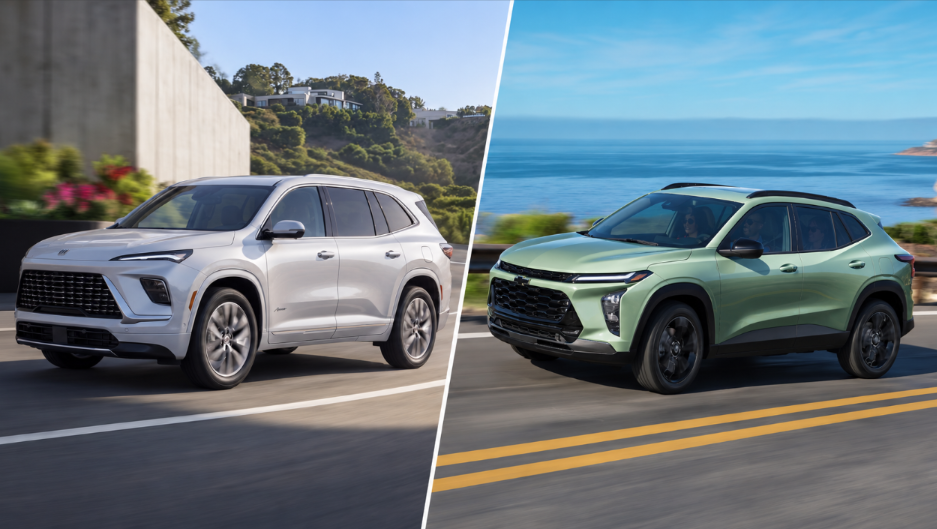
Chevy Trax vs. 2026 Buick Enclave

Shopping for an SUV usually comes down to one question: do you want a nimble daily driver, or a family hauler with room for everyone? The 2026 Chevy Trax vs 2026 Buick Enclave comparison lays out that split pretty clearly. One's a subcompact SUV built around value and efficiency. The other is a three-row SUV designed for larger families who need space and some towing muscle. If you're weighing your options in Guthrie, Oklahoma, here's what actually matters: value, size, technology, and safety.

These two SUVs aren't really competing for the same buyer. The Trax keeps things affordable and efficient for daily driving, while the Enclave is aimed at households that need to seat seven and occasionally tow a trailer. Shoppers comparing subcompact crossovers will find the Trax holds its own in that class, but it's simply not built to play in the Enclave's size category. Explore our 2026 Trax lineup and find a trim that fits your budget.

2026 Chevy Trax: Exterior Design and Standout Features

Chevrolet gives the 2026 Trax a bold, modern look, with sleek body lines and a front grille that feels a bit more upscale than its price tag suggests. New for 2026, buyers can choose Apex Red on the LS, LT, 1RS, and 2RS, or White Sands on the 1RS, 2RS, and ACTIV.

The new LT Midnight Edition adds high-gloss black mirror caps, grille bar, roof rails, wheels, and badging for a darker look, while the ACTIV trim leans into rugged styling with 18-inch black-painted aluminum wheels and all-season tires. Every Trax rides on 7.3 inches of ground clearance, handy for the occasional gravel road around Guthrie.

Trim Lineup

Chevrolet offers the Trax in five trims: LS, 1RS, LT, 2RS, and ACTIV. Every trim shares the same 1.2L ECOTEC turbocharged three-cylinder engine, so the differences come down to styling, wheels, and available tech rather than power. That keeps the lineup simple and lets shoppers pick based on features they actually want.

Interior Comfort and Technology

The Trax cabin is built around practicality. LS and 1RS trims come with an 8-inch touchscreen paired with a 3.5-inch driver information cluster, while LT, 2RS, and ACTIV step up to an 11-inch touchscreen and an 8-inch driver display.

Every trim includes standard wireless Apple CarPlay and Android Auto. Front legroom measures 41.9 inches, and rear legroom reaches up to 38.7 inches, giving adults reasonable comfort for commuting or weekend trips. Total passenger volume comes in at 99.8 cubic feet across the five-seat cabin.

Performance and Fuel Efficiency

Every 2026 Trax trim runs the same 1.2L ECOTEC turbocharged three-cylinder engine producing 137 hp and 162 lb-ft of torque, paired with a six-speed automatic transmission. The Trax is FWD only; AWD isn't offered on any trim. Fuel economy is where it shines, with an EPA rating of 28 city / 32 highway / 30 combined mpg and a 393-mile range on its 13.2-gallon tank. For anyone commuting into Guthrie or running errands around town, that efficiency adds up quickly at the pump.

Safety Features

Chevrolet equips every 2026 Trax trim with Chevy Safety Assist as standard, which includes automatic emergency braking, front pedestrian braking, lane keep assist with lane departure warning, a following distance indicator, IntelliBeam automatic high beams, and forward collision alert. Buyers wanting more can add the optional Driver Confidence Package, which brings adaptive cruise control, rear cross traffic alert, blind zone alert, and rear park assist.

NHTSA gave the Trax five stars for driver frontal protection, four stars for passenger frontal protection, and four stars for rollover resistance. Car and Driver named the Trax a 2026 10Best Trucks and SUVs winner, and U.S. News scored it 8.6 out of 10, naming it a finalist for 2026 Best Subcompact SUV for the Money.

2026 Buick Enclave: Exterior Design and Standout Features

The third-generation Enclave, which launched for 2025, carries over into 2026 as a three-row SUV built for families needing to seat seven. Its larger footprint gives it a commanding road presence, and the design leans into a more upscale, premium look than a typical mainstream SUV.

Trim Lineup

Buick offers the Enclave across three trims: Preferred, Sport Touring, and Avenir. The Avenir sits at the top, adding quilted leather upholstery, ventilated and massaging seats, a panoramic sunroof, and 22-inch wheels for buyers who want the full luxury treatment.

Interior Comfort and Technology

Every 2026 Enclave comes standard with a 30-inch ultrawide display, a Bose 12-speaker audio system, heated front seats, and tri-zone climate control. With 157.3 cubic feet of passenger volume, there's noticeably more room to stretch out across three rows than in a two-row subcompact SUV. Buick also offers Super Cruise as an optional feature for hands-free highway driving.

Performance and Fuel Efficiency

The Enclave runs a 2.5L turbocharged four-cylinder engine producing 328 hp and 326 lb-ft of torque, paired with an eight-speed automatic transmission. FWD is standard, with AWD available. EPA estimates come in at 20 city / 25 highway / 22 combined mpg for FWD models, dropping to 20 city / 24 highway / 21 combined mpg with AWD.

Consumer Reports testing found the Enclave accelerates from 0-60 mph in 8.2 seconds and returned 20 mpg overall, while also noting thick windshield pillars that hamper visibility. Edmunds pointed out some cheap-feeling interior materials and a so-so driving experience. Every Enclave now comes with a standard Trailering Package rated to tow up to 5,000 lbs, which matters for families hauling boats or campers.

Safety Features

IIHS named the 2026 Enclave a Top Safety Pick, a step down from its 2025 Top Safety Pick+ rating. NHTSA gave it a five-star overall rating. J.D. Power gave the Enclave a predicted reliability score of 72 out of 100, a figure worth factoring into any long-term ownership decision.

Head-to-Head: Price and Value Comparison

The Trax is the budget-friendly entry point, starting at $23,495 with destination, while the Enclave sits at roughly double that given its larger size, extra row of seating, and more premium features. Running costs tell a similar story: the Trax's 30 mpg combined rating comfortably beats the Enclave's 22 mpg (FWD) or 21 mpg (AWD).


Category 2026 Chevy Trax 2026 Buick Enclave
Positioning Budget-friendly, entry-level subcompact SUV Premium three-row SUV, roughly double the entry price of the Trax
Trims LS, 1RS, LT, 2RS, ACTIV Preferred, Sport Touring, Avenir
Fuel Economy 30 mpg combined 22 mpg combined (FWD) / 21 mpg combined (AWD)
Reliability/Awards Car and Driver 10Best winner; U.S. News 8.6/10 J.D. Power predicted reliability: 72/100
Best For Value-focused, everyday driving Families needing three rows and towing

Schedule a Trax test drive at Eskridge Chevrolet and see the value firsthand.

Head-to-Head: Size, Seating, and Cargo Space

Anyone cross-shopping these two will notice the Enclave is simply a much bigger vehicle, built for a different purpose, from overall length down to cargo room.


Category 2026 Chevy Trax 2026 Buick Enclave
Length 178.6 inches 207.6 inches
Width 71.7 inches 79.6 inches
Height 61.4 inches 71.0 inches
Seating 5 passengers 7 passengers (three rows)
Passenger Volume 99.8 cu ft 157.3 cu ft
Cargo (min) 25.6 cu ft behind rear seats 22.9 cu ft behind third row
Cargo (max) 54.1 cu ft with seats folded 97.5 cu ft behind first row

The Enclave's extra length and cargo capacity make it the better fit for large families or anyone regularly hauling gear for road trips. The Trax's smaller footprint, on the other hand, makes it noticeably easier to park and maneuver on tighter streets around Guthrie.

Why the 2026 Chevy Trax Comes Out on Top

For most everyday drivers, the 2026 Chevy Trax has the edge on price, fuel efficiency, and everyday usability. Its 30 mpg combined rating beats the Enclave's 22 mpg FWD and 21 mpg AWD figures by a wide margin, and Chevy Safety Assist comes standard across every trim, not bundled into a pricier package. The Trax is also considerably easier to park and navigate through city traffic thanks to its smaller footprint.

That said, buyers who need three rows of seating or a standard 5,000 lb towing capacity will find a real advantage in the Enclave. If that's your priority, Chevrolet's own Traverse, not the Trax, is the more direct three-row alternative worth a look. For everyone else focused on value, efficiency, and everyday practicality, the Trax is the smarter buy.

Visit Eskridge Chevrolet to Test Drive the 2026 Chevy Trax

If the 2026 Chevy Trax sounds like the right fit for your budget and lifestyle, we'd love to show you around one in person.

Eskridge Chevrolet, located at 5307 S Division St in Guthrie, Oklahoma, carries a full lineup of Trax trims so you can compare features and find the right match. Our team can also walk you through financing options and answer any questions about the Trax's tech, safety features, or trim differences.

Stop by during our business hours, Monday through Friday from 8:00 AM to 7:00 PM or Saturday from 8:00 AM to 5:00 PM, or schedule a Trax test drive online to get started. You can also reach us directly at (405) 293-4224 with any questions before your visit.
Posted in:

Related Posts

2026 Chevy Tahoe vs 2026 GMC Yukon

2026 Chevy Tahoe vs 2026 GMC Yukon

When shopping the 2026 Chevy Tahoe vs. the 2026 GMC Yukon, you're looking at one of the most interesting family rivalries in automotive. These full-size SUVs share GM's platform, identical mechanicals, and basic DNA, yet they've grown into distinctly different personalities. The GMC targets buyers who want a more luxurious family hauler with premium touches and upscale materials. The Chevrolet Tahoe vs. GMC Yukon discussion usually comes down to value versus refinement: Tahoe delivers more capability and features for your dollar, while Yukon asks you to pay extra for a more polished experience. Both give you what you'd expect from this class: spacious three-row cabins, modern technology, and serious towing capability. The decision comes down to what matters most to you. Do you want to maximize features and space for your dollar, or would you rather enjoy a more refined daily driving experience? At Eskridge Chevrolet in Guthrie, Oklahoma, we help families navigate this choice by focusing on what the Tahoe does best: delivering uncompromising capability without premium pricing. Ready to explore? Browse our new Tahoe inventory and see the difference firsthand. Exterior Design and Styling Compared The Tahoe versus Yukon difference hits you from a block away. Chevrolet went with a "ready for anything" look that emphasizes capability, while GMC chose a more sophisticated route signaling exclusivity. Tahoe's Bold American Presence The 2026 Tahoe doesn't apologize for its size. That massive dual-port grille dominates the front end, flanked by sharp LED headlights that mean business. Muscular body lines emphasize the Tahoe's width and planted stance, creating road presence that projects authority. The squared-off proportions deliver an almost military-tough appearance that appeals to buyers who want their SUV to command attention. Practical touches blend smoothly without sacrificing looks. Standard roof rails handle gear, while the robust body structure projects visible durability. Substantial wheel wells accommodate serious tire packages, boosting rugged character without sacrificing ride quality. Yukon's Premium Aesthetic Approach The Yukon takes a completely different philosophy with flowing lines, sophisticated proportions, and cleaner surfaces. That signature GMC grille features intricate detailing and premium lighting elements, signaling its position above the Tahoe in GM's lineup. Chrome gets more generous treatment from window surrounds to rocker panels, attracting buyers who see their SUV as a statement about success and taste. Interior Comfort and Passenger Space The Yukon vs. Tahoe interior comparison reveals where that price difference shows up. Both offer generous space across three rows (they share the same shell), but execution tells different stories. Cabin Layout and Seating The Tahoe's cabin prioritizes function. Controls make sense, storage abounds, and you can seat nine people with the available bench configuration. That's crucial for larger families. While the Yukon often features bucket seats, the Tahoe provides that bench option that matters when hauling kids and their friends. Storage solutions throughout show thoughtful engineering: substantial door pockets, generous center console bins, hidden compartments. The dashboard keeps frequently used controls within easy reach, reducing fumbling during chaotic family trips. The Yukon prioritizes individual comfort over maximum occupancy. Standard second-row captain's chairs reduce seating to eight but dramatically improve passenger experience. It's a clear signal about GMC's target: buyers who value personal space and luxury over cramming in every possible passenger. Materials and Refinement Material quality creates a stark separation between these siblings. The Tahoe uses appropriate materials for its price range. Durable cloth seats come standard, leather is available on upper trims, and the dashboard mixes soft-touch surfaces with hard plastics in less-touched areas. It strikes a smart balance between cost control and quality perception. The Yukon elevates everything. Even base trims receive more soft surfaces, real wood accents, and higher-grade leather choices. Switchgear operates with more precision, delivering that damped, expensive feel. The Yukon typically includes extra sound deadening that makes highway cruising noticeably quieter, creating a serene environment on long trips. The Tahoe delivers plenty of comfort, but the Yukon's extra refinement becomes obvious when driven back-to-back. Technology, Infotainment, and Connectivity Features Both SUVs showcase GM's latest technology, though implementation varies slightly. The Tahoe's touchscreen measures up to 17.7 inches, depending on trim, while the Yukon tops out at 16.8 inches. That gives the Chevrolet a notable advantage in screen real estate. Both run GM's latest infotainment software with quick response, wireless Apple CarPlay and Android Auto, plus abundant USB ports for device-laden families. The Yukon's system mirrors the Tahoe's capabilities while often bundling premium audio as standard on higher trims. Same interface, same responsiveness, maintaining consistency across GM's full-size lineup. For those interested in detailed industry comparisons, the technology differences primarily come down to screen size and audio upgrades. Digital gauge clusters replace analog displays on upper trims of both vehicles, providing customizable screens that present information clearly. Head-up display technology projects key data onto the windshield, keeping your eyes on the road. It brings features previously reserved for luxury imports to accessible American pricing. Engine Performance and Towing Capability Here's where the Chevrolet Tahoe vs. GMC Yukon specs reveal identical mechanicals. Both share powertrains developed for GM's full-size platforms, so neither holds inherent performance advantages: Specification 2026 Chevy Tahoe 2026 GMC Yukon Standard Engine 5.3L V8 (355 hp, 383 lb-ft) 5.3L V8 (355 hp, 383 lb-ft) Available Engine 6.2L V8 (420 hp, 460 lb-ft) 6.2L V8 (420 hp, 460 lb-ft) Diesel Option 3.0L Duramax (305 hp, 495 lb-ft) 3.0L Duramax (305 hp, 495 lb-ft) Transmission 10-speed automatic 10-speed automatic Max Towing Capacity Up to 8,400 lbs Up to 8,200 lbs Touchscreen Size 17.7-inch 16.8-inch Max Cargo Volume 122.7 cu ft 122.8 cu ft Seating Capacity Up to 8-9 passengers Up to 8-9 passengers Powertrain Options The standard 5.3-liter V8 produces 355 horsepower, delivering adequate power for most situations while balancing capability with reasonable fuel economy. The 10-speed automatic transmission shifts smoothly and optimizes power delivery across various conditions. Step up to the available 6.2-liter V8 and you unlock 420 horsepower, transforming either SUV into a genuinely quick vehicle. This upgrade proves its worth when towing heavy trailers, maintaining stronger performance under load compared to the base engine. A 3.0-liter Duramax turbo-diesel serves buyers prioritizing fuel economy and maximum towing endurance. Producing 305 horsepower and 495 pound-feet of torque, the diesel's superior efficiency makes it ideal for long-distance travelers and frequent travelers. It offsets its higher cost through reduced fuel expenses over time. Towing Advantages The Tahoe edges ahead with a maximum towing capacity of 8,400 pounds compared to the Yukon's 8,200 pounds when properly equipped. That 200-pound advantage matters for families in Guthrie towing boats to nearby Oklahoma lakes. Both vehicles offer integrated trailer brake controllers, tow/haul transmission programming, and trailer sway control, enhancing safety when hauling heavy loads. Want to discuss towing configurations? Our certified service team can help match the right setup to your needs. The independent rear suspension maintains ride quality when loaded while providing structural capability for serious work. This represents a significant improvement over older body-on-frame SUVs that forced you to choose between refinement and capability. Safety Systems and Driver Assistance Technology Comprehensive safety equipment comes standard across both the GMC Yukon vs. Chevy Tahoe lineups. GM's driver assistance suite provides essential protective features without expensive option packages, including automatic emergency braking with pedestrian detection, forward collision alert, lane keep assist with departure warning, and automatic high beams. Available advanced features include adaptive cruise with stop-and-go capability, enhanced automatic parking assistance, surround-view cameras, and rear pedestrian alert. The Yukon may include some features as standard, where the Tahoe requires optional packages, reflecting GMC's premium positioning. Both SUVs earn strong safety ratings, benefiting from robust structures and comprehensive airbag systems. Large size and elevated seating provide inherent advantages in multi-vehicle accidents, though these benefits come with increased stopping distances compared to smaller vehicles. 2026 Chevy Tahoe vs. 2026 GMC Yukon: The Verdict Declaring a winner in the what's better, Yukon or Tahoe debate misses why both exist. They succeed by serving different priorities while sharing fundamental competence. The Tahoe wins on value, delivering superior towing capacity (8,400 vs. 8,200 lbs), a larger infotainment display (17.7 vs. 16.8 inches), and more capability per dollar while maintaining expected comfort from a premium full-size SUV. The Yukon earns its premium through better materials, additional standard equipment, and more refined execution throughout the cabin. Buyers who view their vehicle as an extension of personal style will appreciate GMC's elevated design language. The experience feels more luxurious even though performance remains virtually identical. Your choice depends on budget flexibility and personal priorities. Families maximizing utility per dollar will find the Tahoe delivers exceptional value without meaningful compromises. The Tahoe vs. Denali comparison showcases maximum separation between these siblings. Denali models incorporate exclusive styling and luxury features, while the Tahoe's High Country trim provides upscale features at a more accessible price point. Visit Eskridge Chevrolet in Guthrie to Find Your 2026 Tahoe Experience the 2026 Tahoe In Person We invite Guthrie area families to explore the 2026 Chevy Tahoe firsthand at our dealership, located at 5307 S Division St. Our extensive inventory allows you to compare trim levels and configurations in person, revealing subtle differences that influence buying decisions beyond spec sheets. Our sales team provides detailed walkthroughs of the Tahoe's features, demonstrating technology systems and explaining capability specifications relevant to your individual needs. Test drives on local roads showcase the SUV's handling, acceleration, and comfort levels that static comparisons can't convey. Financing, Service, and Long-Term Support We offer comprehensive financing options that make Tahoe ownership accessible across various budget levels, working with multiple lenders to secure competitive rates. Trade evaluations provide fair value for current vehicles, while leasing alternatives offer lower monthly payments for buyers who prefer driving new vehicles every few years. Beyond the initial purchase, we support owners through professional maintenance and repair services using genuine Chevrolet parts, protecting long-term reliability and resale value. Contact our team at (405) 293-4224 to schedule a test drive or discuss specific Tahoe configurations. Our commitment to customer satisfaction extends throughout the ownership experience, creating relationships that last well beyond the initial transaction.

2026 chevy travers vs ford explorer

2026 Chevy Traverse vs 2026 Ford Explorer

When families ask us at Eskridge Chevrolet about choosing between the 2026 Chevy Traverse and the 2026 Ford Explorer, we always start with a simple question: What matters most in your daily routine? The Traverse delivers maximum space and cargo flexibility, while the Explorer emphasizes driving dynamics with multiple powertrain options. Both three-row SUVs serve families well, but they approach the job differently. We've found the Traverse excels for families prioritizing passenger comfort and storage capacity, while the Explorer appeals to buyers wanting a sportier feel behind the wheel. Understanding these fundamental differences helps you focus on what actually matters for your needs. 2026 Chevy Traverse vs 2026 Ford Explorer: Quick Overview The 2026 Chevy Traverse vs 2026 Ford Explorer comparison reveals two capable family haulers with distinct philosophies. In our experience helping families around Guthrie, Oklahoma, the Traverse wins at maximizing interior volume, offering genuinely usable third-row seating and superior cargo space. This makes the Chevrolet Traverse 3-row SUV ideal for families regularly transporting six or seven people or hauling gear for weekend activities. The Explorer counters with more engine choices, including a powerful twin-turbo V6 that delivers quicker acceleration. Here's how the key specifications compare: Specification 2026 Chevy Traverse 2026 Ford Explorer Engine/Powertrain 2.5L Turbo 4-cylinder 2.3L Turbo 4-cylinder (base) Horsepower/Torque 328 hp / 326 lb-ft 300 hp / 310 lb-ft (base) Drivetrain Options FWD or AWD RWD or AWD Transmission 8-speed automatic 10-speed automatic Fuel Economy (City/Hwy/Combined) 20/27/23 MPG (FWD est.) 21/28/24 MPG (base, RWD est.) Cargo Volume (behind 3rd row) 23.0 cu ft 18.2 cu ft Max Cargo Volume 98.0 cu ft 87.8 cu ft Towing Capacity 5,000 lbs 5,600 lbs Seating Capacity 7 or 8 passengers 7 passengers Your decision comes down to your family's priorities. We recommend the Traverse for families needing maximum space and versatility. The Explorer suits buyers wanting more driving engagement with flexible performance options. Exterior Design and Styling Comparison The 2026 Chevy Traverse presents a traditional SUV stance that prioritizes function over flash. Its upright proportions and generous dimensions tell you right away that interior volume matters here. We stock several trim levels, from family-friendly LS and LT models to the sportier RS and rugged Z71 versions. The Z71 adds off-road touches like unique wheels and skid plates for families who venture beyond paved roads. The Explorer takes a sleeker, more aerodynamic approach. Ford's designers created a lower, more tapered profile that trades some utility for style. The Explorer's front fascia looks more aggressive, especially in ST and Platinum trims. Both SUVs offer power liftgates for easy cargo access, though we've noticed the Traverse's boxier shape makes loading bulky items simpler. You'll see the size difference immediately when they're parked side-by-side. The Traverse runs longer and taller to accommodate its roomier interior. Interior Comfort and Passenger Space Front and Second Row Space The Chevy Traverse interior impresses with generous dimensions throughout. Front passengers enjoy ample headroom and legroom, with supportive seats designed for long highway drives common here in Oklahoma. The dashboard layout stays intuitive, placing controls within easy reach. Second-row passengers get impressive legroom that rivals some luxury SUVs, plus the Smart Slide feature allows easy third-row access without removing child seats. The Explorer's front seats offer similar comfort with slightly more bolstering, reflecting its sportier character. Second-row space remains competitive, though adults typically notice the Traverse provides a few extra inches of stretch room. The Explorer's second-row seats slide and recline nicely, offering good versatility, but can't match the Traverse's pure roominess for wider passengers or those needing extra shoulder space. Third Row and Cargo Capacity The Chevy Traverse's 3rd row capability truly shines when you compare adult usability. We regularly demonstrate this to families: adults up to six feet tall can sit comfortably in the Traverse's third row, making it practical for carpooling teenagers or adult passengers on longer trips. The Explorer's third row works fine for children but becomes cramped for adults beyond short drives. Cargo capacity represents another significant Traverse advantage. With all seats up, it offers substantially more storage behind the third row. Fold the third row down, and the gap widens dramatically. Maximum cargo volume with all rear seats folded creates massive space that easily handles camping gear, sports equipment, or home improvement supplies. We've helped many families who switched from competitors specifically because they needed this hauling capability. Technology and Features Infotainment and Connectivity The Chevy Traverse features include an impressive 17.7-inch touchscreen that dominates the dashboard. This expansive display reduces menu diving by showing more information simultaneously. Google Built-in integration provides seamless smartphone connectivity, voice commands through Google Assistant, and direct app access through the vehicle's system. Wireless Apple CarPlay and Android Auto come standard, eliminating cable clutter. The Explorer responds with a capable touchscreen running Ford's SYNC 4 system. It delivers quick response times and includes wireless smartphone integration on most trims. Both vehicles offer premium audio upgrades, multiple USB ports throughout the cabin, and available rear-seat entertainment systems. We find the Traverse's larger screen and intuitive Google-based interface appeals more to tech-focused buyers, while the Explorer's system satisfies those wanting straightforward operation. Standard and Available Equipment Looking at equipment levels across the Traverse lineup reveals a focus on family convenience. Even base LS models include tri-zone automatic climate control, allowing front, second-row, and third-row passengers independent temperature settings. Power-adjustable driver seats, remote start, and keyless entry come standard. Higher trims add heated and ventilated front seats, a heated steering wheel, and power-folding third-row seats that simplify cargo loading. The Explorer distributes similar features differently across its range. Ford includes more performance-oriented equipment in sportier trims, like paddle shifters and drive mode selectors. The Traverse emphasizes comfort and convenience, with available hands-free power liftgate, wireless charging, and a panoramic sunroof. Your choice depends on whether family comfort or driving engagement matters more. Performance and Fuel Economy Engine Power and Towing Capability The Chevy Traverse performance comes from a single turbocharged 2.5-liter four-cylinder engine paired with an eight-speed automatic transmission. This combination produces 328 horsepower and 326 pound-feet of torque, delivering smooth acceleration for merging onto highways and confident passing power. Front-wheel drive comes standard, with AWD available on all trims for improved traction during Oklahoma's occasional winter weather. Maximum towing capacity reaches 5,000 pounds when properly equipped, handling most family trailers, small boats, or utility trailers. The Explorer offers more powertrain variety, starting with a turbocharged 2.3-liter four-cylinder making less power than the Traverse's engine. Ford provides upgrade paths, including a potent twin-turbo 3.0-liter V6 in ST and Platinum trims. This engine transforms the Explorer's character, delivering quick acceleration and engaging throttle response. The Explorer's maximum towing capacity exceeds the Traverse when equipped with larger engines, appealing to buyers regularly pulling heavier loads. Chevy Traverse MPG vs Explorer Efficiency The Chevy Traverse mpg delivers competitive efficiency for its size. The turbocharged four-cylinder returns approximately 20 MPG city and 27 MPG highway with front-wheel drive, with AWD dropping numbers slightly. Real-world efficiency on Oklahoma highways typically exceeds EPA estimates thanks to the eight-speed transmission keeping engine speeds low at cruising speeds. The Explorer's base turbocharged four-cylinder achieves slightly better fuel economy, particularly on the highway. Upgrading to larger engines predictably reduces efficiency, with the twin-turbo V6 consuming considerably more fuel during aggressive driving. Against the base Explorer, the Traverse's fuel economy stays competitive while providing more usable interior space. Safety Features and Ratings The Chevy Traverse safety package includes Chevy Safety Assist standard across all trims, bundling automatic emergency braking, forward collision alert, lane keep assist with lane departure warning, and automatic high beams. These systems provide crucial intervention when hazards appear suddenly. Available upgrades include blind spot monitoring, rear cross traffic alert, and rear pedestrian alert. The Explorer offers similar baseline protection through Ford Co-Pilot360, including automatic emergency braking, blind spot monitoring, lane keeping assistance, and automatic high beams on most trims. The Traverse distinguishes itself with available Super Cruise, GM's hands-free driving assistance system that works on compatible highways. This technology allows hands-off steering while maintaining driver attention monitoring. Both SUVs earn strong safety ratings from NHTSA and IIHS. The Traverse's extra third-row space may provide additional protection through increased crush zones in rear impacts. We recommend test-driving both to experience how these safety systems work in real-world conditions. Pricing, Value, and Final Verdict The Traverse typically starts at a competitive price while delivering more interior space and cargo capacity than the Explorer. This makes it attractive for families needing maximum room without luxury SUV pricing. We've found it offers exceptional value when you consider the space-per-dollar equation. When comparing similarly equipped models, examine what features matter most. The Traverse delivers more space, a larger infotainment screen, and available hands-free driving technology. The Explorer counters with more engine choices, slightly better base fuel economy, and sportier driving character. Ultimately, Chevrolet maximizes practicality and interior volume, while Ford balances space with performance. For families prioritizing passenger comfort, cargo capacity, and overall roominess, we believe the Traverse represents the stronger choice. Its adult-friendly third row, superior cargo volume, and family-focused features deliver exceptional value. Buyers wanting a more engaging driving experience with flexible powertrain options may prefer the Explorer despite its tighter third row. Check our current specials to see what incentives might make your decision easier. Experience the 2026 Chevy Traverse at Eskridge Chevrolet We invite you to experience the 2026 Chevy Traverse firsthand at our dealership located at 5307 S Division St, Guthrie, Oklahoma, 73044. Test-driving reveals insights that specifications can't convey. Contact our team at (405) 293-4224 or reach out through our online contact form to schedule a test drive or discuss financing options that fit your budget. We're open Monday through Friday from 8 AM to 7 PM and Saturday from 8 AM to 5 PM. We understand the unique needs of families shopping for three-row SUVs. Our experienced team can explain the differences between trim levels, show you the Traverse's spacious interior, demonstrate its technology features, and let you experience its driving dynamics on local roads.

2026 chevy trax vs ford escape

2026 Chevy Trax vs 2026 Ford Escape

Shopping for a compact SUV? You're looking at some tough choices. The 2026 Chevy Trax and 2026 Ford Escape take completely different approaches to this popular segment. Here at Eskridge Chevrolet in Guthrie, Oklahoma, we see buyers wrestling with these decisions daily. Performance, interior space, tech features, safety ratings, value - there's a lot to consider. Let's break down what actually matters when you're choosing between these two. 2026 Chevy Trax vs 2026 Ford Escape: Overview and Key Differences These vehicles couldn't be more different in philosophy. The Trax keeps things simple: affordable, efficient, and easy to park anywhere. It's the straightforward choice. The Escape? That's where things get complicated (in a good way). Multiple trims, hybrid options, different power levels - basically, whatever you want, Ford probably builds it. Both seat five people and give you that higher seating position everyone loves. But that's where similarities end. The Trax works perfectly if you're navigating tight city streets and watching every dollar at the gas pump. The Escape appeals to families who need more space and tech enthusiasts who want the latest features. Here's the hard data: Spec 2026 Chevy Trax 2026 Ford Escape Engine 1.2L turbo 3‑cyl ECOTEC 1.5L EcoBoost turbo 3‑cyl (base); hybrid available Horsepower 137 hp 180 hp gas; 191–192 hp hybrid Torque 162 lb‑ft 199 lb‑ft (gas) Fuel economy (city/hwy, FWD) 28/32 MPG 27/34 MPG gas; 42/36 MPG hybrid Combined MPG 30 MPG Approx. 30 MPG gas; 39–40 MPG hybrid Cargo space (behind seats) 25.6 cu. ft. 37.5 cu. ft. Max cargo space (seats down) 54.1 cu. ft. Up to 65.4 cu. ft. Drivetrain availability FWD only FWD or AWD (gas); hybrid FWD or AWD in some markets Infotainment 11" touchscreen (most trims) 8"–13" touchscreen, depending on trim Curb weight range 2,980–3,000 lbs 3,270–3,420+ lbs (gas); hybrids slightly heavier The target buyers tell the whole story. Trax buyers are often moving up from a sedan or buying their first SUV. They want something reliable without breaking the bank. Escape buyers? They're comparing against Honda CR-V, Toyota RAV4 - the established players who charge premium prices for premium features. Chevy Trax Performance and MPG vs Ford Escape Efficiency Your daily drive shapes how these engines feel. They're built for completely different purposes, and you'll notice immediately. Engine Power and Driving Dynamics The Trax runs a 1.2-liter turbocharged three-cylinder making 137 hp and 162 lb-ft of torque. Sounds modest on paper, right? But here's the thing: it weighs 550-650 pounds less than the Escape. That lighter weight makes it feel peppy around town. Stop-and-go traffic, tight parking spots, quick lane changes - the Trax handles it all with surprising agility. Ford gives you options. The base 1.5-liter turbo three-cylinder pumps out 180 hp and 199 lb-ft. That's noticeably more grunt when merging onto highways or climbing hills. Want even more? The hybrid setup delivers 192 hp with that smooth electric motor assistance. There's even a plug-in hybrid if you can charge at home. Driving character? Night and day difference. The Trax feels like a nimble city car that happens to sit higher. It's genuinely fun to toss around corners. The Escape feels more substantial, more planted at highway speeds. Ford includes drive modes (Eco, Sport, Slippery) that the Trax skips entirely. You also get features like Reverse Brake Assist that the Trax doesn't offer. Fuel Economy Comparison This is where it gets interesting. The Trax delivers 28 MPG city, 32 highway, 30 combined. Consistent, predictable, and good enough for most people. Simple. The Escape's story depends entirely on which version you choose. Regular gas engines hit 27 city, 34 highway. Pretty similar to the Trax, actually. But those hybrid models? Game changer. We're talking 42 MPG in the city, where electric motors do most of the work. The plug-in hybrid goes even further if you can charge regularly. Your annual fuel costs vary dramatically here. The Trax keeps things steady across its single engine choice. The Escape hybrid can cut your gas bills substantially, but you'll pay thousands more upfront. Do the math based on your driving patterns. Exterior Design: Style and Modern Appeal Compared First impressions count. The Trax shows off contemporary Chevy styling with a bold front end and sculpted sides. Its compact size creates an athletic look that emphasizes agility over presence. LED lighting elements give it a modern appearance without requiring expensive packages. The Escape takes up more visual space, and Ford's designers used every inch. The grille stretches wider, the hood extends longer, and the overall profile looks more commanding on the road. There's more drama in the side profile with that rising beltline and sloping roof design. Color options reflect each vehicle's positioning. The Trax sticks to mainstream choices that most buyers prefer. The Escape expands into more adventurous territory with packages that add roof rails, upgraded lighting, and distinctive body cladding. Chevy Trax Interior vs Ford Escape: Comfort and Cabin Quality Step inside and the differences become obvious. The Trax gives you a functional workspace focused on the essentials. Hard plastics dominate lower surfaces, though Chevy softened up the areas you touch most. The dashboard stays simple with actual buttons for climate control instead of burying everything in touchscreen menus. It feels practical rather than luxurious, which matches what you're paying. The Escape steps up its game considerably. Better materials appear throughout the cabin, creating a genuinely more refined environment. Soft-touch surfaces extend further down the doors and across the dash. You'll notice stitching details and contrasting textures that add visual interest. The center console feels more substantial with smarter storage solutions. Road and wind noise stay quieter at highway speeds, too. Passenger Space and Seating Comfort Be honest about your passenger's needs. The Trax's compact dimensions create real limitations for rear-seat occupants. Adults fit fine for quick trips, but longer drives reveal that cramped rear legroom. The bench sits pretty low, forcing passengers into that knees-up position nobody likes. Door openings feel narrow when you're getting in and out. The Escape transforms rear-seat comfort completely. Adults can actually stretch out back there with generous legroom. The higher roofline provides 39.3 inches of rear headroom even for taller folks. The bench sits at a more natural height, making long drives bearable. Wider door openings simplify entry and exit, plus make child seat installation much easier. Cargo Capacity and Versatility Cargo space often determines the final decision. The Trax offers 25.6 cubic feet behind the rear seats - adequate for grocery runs and weekend trips. Fold those seats down, and capacity expands meaningfully, though the cargo floor sits higher than ideal for loading heavy items. The Escape absolutely dominates here with 37.5 cubic feet behind the rear seats. That cargo area stretches deeper and wider, easily swallowing larger purchases. The flat loading floor after folding seats simplifies loading furniture or recreational gear. Underfloor storage compartments keep smaller items organized. Power liftgate operation adds convenience on equipped models. The wider opening accommodates stuff that simply won't fit in the Trax. Ford includes cargo management features that the Trax skips: adjustable floor heights, tie-down points, and power outlets. The Trax keeps cargo organization basic. Chevy Trax Features vs Ford Escape Technology Technology integration reveals another significant gap. The Trax covers essential infotainment needs through a 7-inch touchscreen (10.25-inch available) with wireless Apple CarPlay and Android Auto. The system responds adequately and displays clear graphics. Navigation requires your smartphone rather than built-in mapping. The Escape pushes technology much further. Larger screens appear on most trims, with premium models featuring expansive displays that dominate the dashboard. Built-in navigation comes standard on higher trims. Premium audio systems from recognized brands deliver noticeably enhanced sound quality. The digital instrument cluster replaces analog gauges with customizable displays showing everything from trip data to navigation directions. Driver assistance technologies create another meaningful separation. The Trax includes fundamental safety features without the advanced systems found in pricier segments. The Escape bundles sophisticated driver aids across more trim levels: adaptive cruise control with stop-and-go functionality, lane centering assistance, and automated parking systems. Connectivity features reflect what modern buyers expect. Both offer basic connected services, but the Escape provides more comprehensive remote functions through smartphone apps. Remote start, door lock verification, vehicle location tracking - conveniences that add up daily. Over-the-air software updates keep systems current without dealership visits. Chevy Trax Safety vs Ford Escape: Protection and Driver Assistance Safety performance splits along engineering priorities and standard equipment. The Trax includes essential airbag systems, stability control, and basic driver aids. Forward collision warning and automatic emergency braking come standard. The rearview camera displays clear images during reversing. Blind spot monitoring appears on higher trims as optional equipment. Interestingly, the Trax demonstrates superior NHTSA 35 MPH front crash test performance with lower neck compression and hip force in certain scenarios. But the Escape achieves higher IIHS moderate front offset scores and better rear passenger injury measures. The Escape pursues safety more aggressively through comprehensive standard equipment. Advanced driver assistance systems come standard across more trim levels. Lane keeping assist actively steers the vehicle back between lines when drift occurs. The rear cross-traffic alert warns of approaching vehicles during parking lot reversing. Structural engineering contributes to safety differences. The Escape's additional size provides more crush zones that absorb impact energy. High-strength steel usage in critical areas improves crash protection. Side-impact beams and reinforced pillars enhance rollover safety. Pricing, Value, and Final Verdict: Why the 2026 Chevy Trax Wins Money talks, especially in this segment. The Trax enters at an accessible starting point that significantly undercuts the Escape. Base model pricing brings new vehicle ownership within reach for buyers who might otherwise shop used cars. Trim progressions remain modest, keeping fully-equipped models affordable. Lower operating costs through reasonable insurance rates and maintenance expenses sweeten the deal. The Escape commands premium pricing, though it justifies those higher sticker prices with superior capabilities across multiple areas. Base models start thousands higher than the Trax but include more standard equipment. Hybrid models add even more to those prices, though fuel savings help offset the difference over time. Value depends entirely on your priorities. The Trax maximizes value for buyers focused on affordability and essential functionality. Its straightforward approach eliminates complexity and unnecessary features that inflate costs. Urban drivers benefit from that nimble, compact size. The 550-650 lb weight advantage creates a responsive, engaging driving character that many prefer over crushing horsepower numbers. The Escape rewards buyers willing to invest more up front. Superior passenger comfort, that massive cargo capacity advantage (37.5 cubic feet versus 25.6), advanced technology features, and available AWD justify premium pricing for families requiring maximum versatility. For budget-conscious buyers who prioritize affordability, urban maneuverability, and efficient operation, the 2026 Chevy Trax emerges as the smarter choice. Its combination of accessible pricing, competitive 30 MPG combined fuel economy, and essential features delivers practical transportation without financial stress. Experience the 2026 Chevy Trax at Eskridge Chevrolet Reading comparisons only tells part of the story. Nothing beats experiencing the 2026 Chevy Trax firsthand. Visit us at Eskridge Chevrolet in Guthrie, Oklahoma, to see how this vehicle handles your specific driving conditions. Test driving reveals whether ergonomics suit your preferences and if cabin space meets your needs. You'll discover how the technology interfaces work and whether the driving dynamics match your expectations. Our experienced staff can explain available features, trim differences, and current incentives that affect your total investment. We provide comprehensive services beyond the initial purchase: financing options, trade-in evaluations, and ongoing service using genuine Chevrolet parts. Contact us at (405) 293-4224 or through our website to schedule a test drive and start your journey toward 2026 Chevy Trax ownership.